
Can AI Help You Master New Skills at Warp Speed? Absolutely, Here is How.

Have you ever felt like you’re sprinting on a treadmill of endless skill acquisition, desperately trying to keep pace with the ever-evolving job market?
Well, my ambitious friend, it’s time to call in the cavalry – and by cavalry, I mean our silicon-brained allies. Buckle up as we dive into the exhilarating world of AI-powered learning, where skills are acquired at warp speed and the future of education looks brighter than a supernova.
The AI Learning Revolution: Beyond Robots Taking Notes
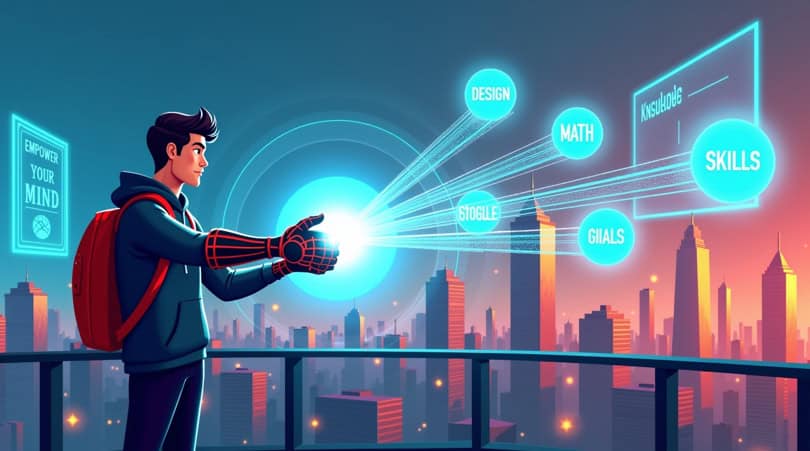
Picture this: you’re Neo in The Matrix, downloading kung fu directly into your brain. While we’re not quite there (yet), AI is bringing us pretty darn close. It’s transforming the learning landscape faster than you can say “I know kung fu.”
But here’s the kicker – AI isn’t just a glorified note-taker or a robotic tutor that drones on about the Pythagorean theorem. Oh no, it’s much smarter than that. It adapts, it personalizes, and sometimes it even cracks a joke (though admittedly, its humor chip might need an upgrade).
So, what exactly makes AI the superhero of the learning world? Let’s break it down:
- Personalization on steroids: AI analyzes your learning style, pace, and preferences faster than you can say “What’s my learning style?” It’s like having a personal stylist for your brain.
- Adaptive learning paths: Remember that time you got lost following Google Maps and ended up in a field full of cows? Well, AI-powered learning is like having a GPS that actually knows where it’s going.
- Real-time feedback: Imagine having a teacher who never sleeps, never loses patience, and is always ready to help. That’s AI for you (minus the coffee breath).
- Data-driven insights: AI crunches numbers faster than you can say “big data,” providing insights into your learning patterns that even you didn’t know existed.
- Accessibility: With AI, learning becomes as easy as Netflix binging. Anytime, anywhere, any device – your education is quite literally at your fingertips.
But let’s not get too starry-eyed. AI might be smart, but it still can’t read your mind. So if you’re hoping it’ll magically know you need a coffee break, you might be waiting a while. It’s a powerful tool, not a magic wand.
Personalized Learning: Your AI GPS to Skill Mastery
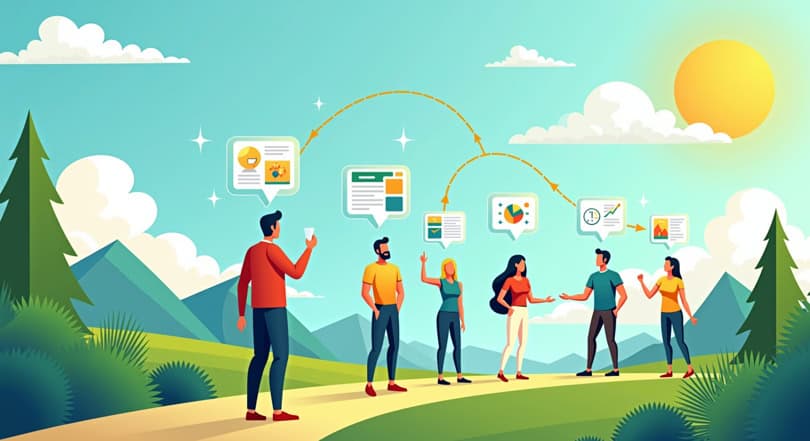
Now, let’s dive deeper into how AI acts as your personal learning navigator. These clever algorithms create a tailor-made learning journey that’s as unique as your fingerprint – or your questionable taste in music.
Adaptive Pacing: The Goldilocks Zone of Learning
Too slow? AI speeds things up. Too fast? It slows down. It’s like having a DJ for your brain, always hitting the right tempo. Here’s how it works:
- Initial assessment: AI gauges your current skill level faster than you can say “pop quiz.”
- Progress tracking: It monitors your performance in real-time, adjusting the difficulty as you go.
- Dynamic content delivery: The AI serves up bite-sized lessons or deep dives based on your progress and engagement.
Remember, though – AI might be smart, but it can’t force-feed you knowledge. You still need to show up and do the work. It’s not going to learn for you while you binge-watch the latest season of “Stranger Things.”
Learning Style Matchmaking: Because One Size Doesn’t Fit All
Are you a visual learner who needs colorful diagrams to understand complex concepts? Or an auditory learner who absorbs information best through podcasts? Maybe you’re a kinesthetic learner who needs to get hands-on to truly grasp a new skill. Whatever your style, AI’s got your back.
- Visual learners: Prepare for an onslaught of infographics, videos, and mind maps.
- Auditory learners: Get ready for a smorgasbord of podcasts, audiobooks, and voice-based interactions.
- Kinesthetic learners: Brace yourself for interactive simulations and virtual reality experiences.
But here’s a pro tip: don’t box yourself in. The best learners are adaptable, and AI can help you strengthen your weaker learning styles. Who knows? You might discover a hidden talent for interpretive dance as a learning method. (AI-powered dance lessons, anyone?)
Motivation Boosters: Keeping Your Learning Engine Revved Up
Let’s face it – even the most dedicated learners sometimes feel about as motivated as a sloth on a Monday morning. But AI has a few tricks up its sleeve to keep you engaged:
- Gamification: Turn your learning journey into a quest, complete with levels, achievements, and maybe even a boss battle or two.
- Micro-learning: Break down intimidating topics into bite-sized chunks that you can tackle in between Netflix episodes.
- Personalized reminders: Get gentle (or not-so-gentle) nudges to keep you on track, tailored to your personality and goals.
- Progress visualization: Watch your skills grow in real-time with fancy graphs and charts. It’s like a Fitbit for your brain!
Remember, though – while AI can provide the carrot, it’s up to you to avoid the stick of procrastination. No amount of clever algorithms can replace good old-fashioned discipline.
AI-Powered Tools: Your Learning Superheroes
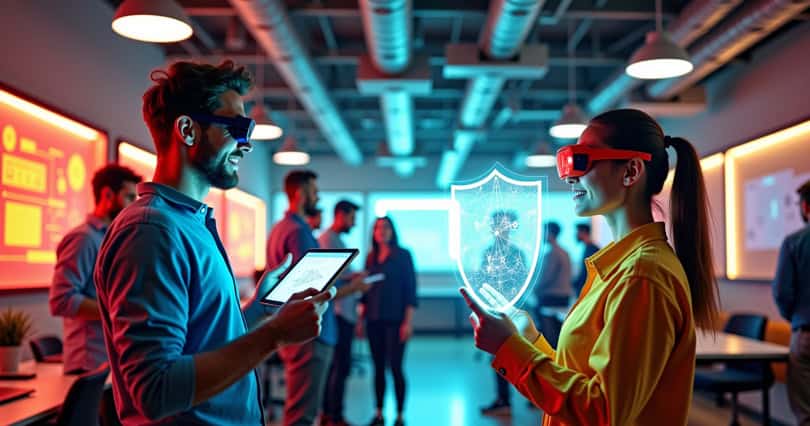
Now that we’ve covered the ‘how,’ let’s talk about the ‘what.’ AI has spawned a whole universe of learning tools that make traditional methods look like stone tablets and chisels.
1. Intelligent Tutoring Systems: Like Having Einstein on Speed Dial
Imagine having a tutor who knows everything, never loses patience, and is available 24/7. That’s what AI-powered tutoring systems offer. Here’s what makes them special:
- Adaptive questioning: The system asks questions that push you just beyond your comfort zone, helping you grow without feeling overwhelmed.
- Instant feedback: No more waiting for your teacher to grade your paper. Get immediate insights on where you went wrong (or right!).
- Personalized explanations: If you don’t understand something, the AI tutor can explain it in multiple ways until it clicks.
But keep in mind – while AI tutors are impressive, they’re not infallible. They might occasionally give you the AI equivalent of “Because I said so.” Always keep your critical thinking cap on!
2. Natural Language Processing: For When You Want to Speak Klingon… or Just Improve Your French
NLP is the secret sauce that allows AI to understand and generate human language. For language learners, this is nothing short of revolutionary. Here’s why:
- Conversation practice: Chat with an AI that never gets tired, never judges your accent, and can switch between beginner and advanced levels at the drop of a hat.
- Real-time translation: Stuck on a word? Get instant translations and explanations without breaking your flow.
- Pronunciation feedback: Get detailed feedback on your accent and intonation. It’s like having a choir director for your mouth.
Just don’t get so caught up in your AI language practice that you start ordering coffee in Elvish at your local Starbucks. Trust me, it rarely ends well.
3. Gamification and AI: Because Who Said Learning Can’t Be as Addictive as Candy Crush?
Remember how you told yourself you’d play “just one more level” of that mobile game, and suddenly it was 3 AM? Now imagine harnessing that addictive power for learning. That’s what AI-powered gamification does:
- Dynamic difficulty: The game adjusts in real-time to keep you in that sweet spot between boredom and frustration.
- Personalized quests: Tackle challenges tailored to your learning goals and interests.
- Social learning: Compete or collaborate with other learners in a global community.
Just be careful – you might find yourself saying “Just one more lesson” at 2 AM. Your boss might not appreciate your newfound enthusiasm for 3 AM trigonometry.
4. VR and AR with AI: For When Reading About Brain Surgery Isn’t Enough
Virtual and Augmented Reality, powered by AI, are taking immersive learning to a whole new level. Here’s what’s possible:
- Virtual field trips: Visit ancient Rome or explore the inside of a cell, all from your living room.
- Skill practice: Perform virtual surgery, conduct chemistry experiments, or practice public speaking in front of an AI audience.
- Interactive storytelling: Learn history or literature by living through events in VR.
Don’t get so immersed that you forget about the real world. We don’t want you trying to cast spells on your roommate or dissecting your houseplants.
Breaking Through Plateaus: AI as Your Personal Trainer

We’ve all been there – stuck on a learning plateau, feeling about as motivated as a koala during nap time. But fear not! AI is here to give you a swift kick in the… motivation.
Skill Gap Analysis: Spotting Your Weaknesses Faster Than Your Ex
AI doesn’t just teach – it analyzes. Here’s how it helps you identify and overcome your learning hurdles:
- Comprehensive assessment: AI evaluates your skills across multiple dimensions, spotting gaps you didn’t even know existed.
- Predictive analysis: It doesn’t just tell you where you’re struggling now, but where you might face challenges in the future.
- Tailored recommendations: Get personalized suggestions for courses, exercises, or resources to fill those gaps.
Knowing your weaknesses is just the first step. You still need to put in the work to overcome them. AI can lead you to water, but it can’t make you drink (or learn, in this case).
AI-Driven Motivation and Habit Formation: Your Digital Life Coach
Staying motivated is half the battle in learning. Here’s how AI keeps you on track:
- Smart goal-setting: AI helps you set SMART (Specific, Measurable, Achievable, Relevant, Time-bound) goals based on your progress and aspirations.
- Habit tracking: Monitor your learning habits and get nudges to stay consistent.
- Personalized rewards: Receive tailored incentives that actually motivate you (because let’s face it, not everyone is motivated by virtual stickers).
It’s like having a drill sergeant and a cheerleader rolled into one. Except this one won’t make you do push-ups in the rain (unless you’re into that sort of thing).
Overcoming Cognitive Biases: When Your Brain Is Your Own Worst Enemy
Our brains are amazing, but they’re also riddled with cognitive biases that can hinder learning. AI can help you recognize and overcome these mental stumbling blocks:
- Confirmation bias: AI presents diverse viewpoints to challenge your preconceptions.
- Dunning-Kruger effect: Get realistic assessments of your skill level to avoid overconfidence.
- Sunk cost fallacy: Receive objective advice on when to persist and when to change course in your learning journey.
Just don’t expect AI to cure all your cognitive quirks. It can’t make you a perfectly rational being (we leave that to the Vulcans).
The Future of Learning: AI and Beyond
Strap on your jetpacks, folks – we’re zooming into the future of learning. While we’re not quite at the “download kung fu directly into your brain” stage, the horizon is looking pretty spectacular.
AI Mentors: Like Yoda, But With Better Grammar
Imagine having a mentor who combines the wisdom of Yoda, the knowledge of Google, and the patience of Bob Ross. That’s where we’re headed with AI mentors:
- Lifelong guidance: An AI companion that grows with you, adapting its mentoring style as you progress through your career.
- Cross-disciplinary insights: Connect dots across different fields of study, fostering innovation and creative problem-solving.
- Emotional intelligence coaching: Yes, even your EQ can be improved with a little help from our AI friends.
Ok, let’s keep it real – no matter how advanced AI becomes, it’s not going to replace the value of human mentorship entirely. Sometimes you need a flesh-and-blood mentor to share war stories over a cup of coffee (or a pint of beer).
Brain-Computer Interfaces: For When Typing Is Just Too Much Effort
We’re stepping into sci-fi territory here, folks. Brain-Computer Interfaces (BCIs) are no longer just the stuff of cyberpunk novels:
- Direct neural feedback: Imagine an AI that can detect when you’re confused and immediately clarify the concept.
- Thought-controlled learning environments: Navigate virtual learning spaces with your mind. No hand cramps from mouse-clicking here!
- Memory enhancement: BCIs could potentially help encode information directly into your long-term memory.
Exciting stuff, right?
Collaborative AI: Because Even Robots Know Teamwork Makes the Dream Work
The future of learning isn’t just about one-on-one interactions with AI. It’s about creating intelligent learning ecosystems:
- AI-facilitated group projects: Imagine an AI that can optimally assign roles in a group project based on each person’s strengths and learning goals.
- Global learning communities: Connect with learners worldwide, with AI facilitating discussions and translating in real-time.
- Crowd-sourced knowledge bases: Contribute to and learn from constantly evolving, AI-curated knowledge repositories.
It’s like Wikipedia meets The Borg, but less creepy and more educational.
Your Call to Action

So, are you ready to join the AI learning revolution? To boldly go where no learner has gone before? Here’s your mission, should you choose to accept it:
- Explore AI-powered learning platforms: Dive into apps and websites that use AI to personalize your learning experience.
- Experiment with different AI tools: Try out various AI-powered study aids, from smart flashcards to VR simulations.
- Cultivate an AI-friendly learning mindset: Be open to new methods, embrace data-driven feedback, and don’t be afraid to let AI push you out of your comfort zone.
- Stay informed: Keep up with the latest developments in AI and education. The field is evolving faster than a cheetah on roller skates.
- Maintain a balanced approach: Remember that AI is a powerful tool, but it’s not a magic wand. Combine AI-powered learning with traditional methods, human interaction, and good old-fashioned practice.
In general, the goal isn’t to become dependent on AI but to use it as a powerful ally in your quest for knowledge and skills. Think of AI as the R2-D2 to your Luke Skywalker – a trusty sidekick that enhances your own abilities.
The Last Word: Human Creativity in an AI World

As we wrap up our whirlwind tour of AI-powered learning, let’s address the elephant in the room: what about human creativity? Won’t AI make us all into learning robots?
Fear not, intrepid learner! The rise of AI in education isn’t about replacing human intelligence – it’s about augmenting it. By taking care of the grunt work of learning (memorization, basic practice, etc.), AI frees up our magnificent human brains to focus on what we do best: creative problem-solving, critical thinking, and innovation.
In fact, as AI handles more of the routine aspects of learning, the premium on human creativity will only increase. The future belongs not to those who can merely absorb information, but to those who can synthesize it in novel ways, draw unexpected connections, and imagine new possibilities.
So, as you embrace AI in your learning journey, remember to nurture your uniquely human qualities. Use AI to learn facts, skills, and processes, but use your human creativity to question, innovate, and imagine.
The future of learning is here, and it’s a beautiful synergy of human and artificial intelligence. Are you ready to upgrade your brain?
Now, go forth and learn! And if you happen to become fluent in Klingon along the way, well, that’s just a bonus. Qapla’! (That’s “Success!” in Klingon, in case you were wondering. See? You’re learning already!)
External Resources:
- “The Impact of Artificial Intelligence on Learning, Teaching, and Education” – European Commission Report
- “Personalized Learning: The State of the Field & Future Directions” – Center for Curriculum Redesign
- “Virtual Reality and Augmented Reality in Education” – Frontiers in Psychology
- “Artificial Intelligence in Education: Promises and Implications for Teaching and Learning” – Center for Curriculum Redesign
- “The Future of Jobs Report 2023” – World Economic Forum