
#54 | Even Grokipedia needs Wikipedia to exist
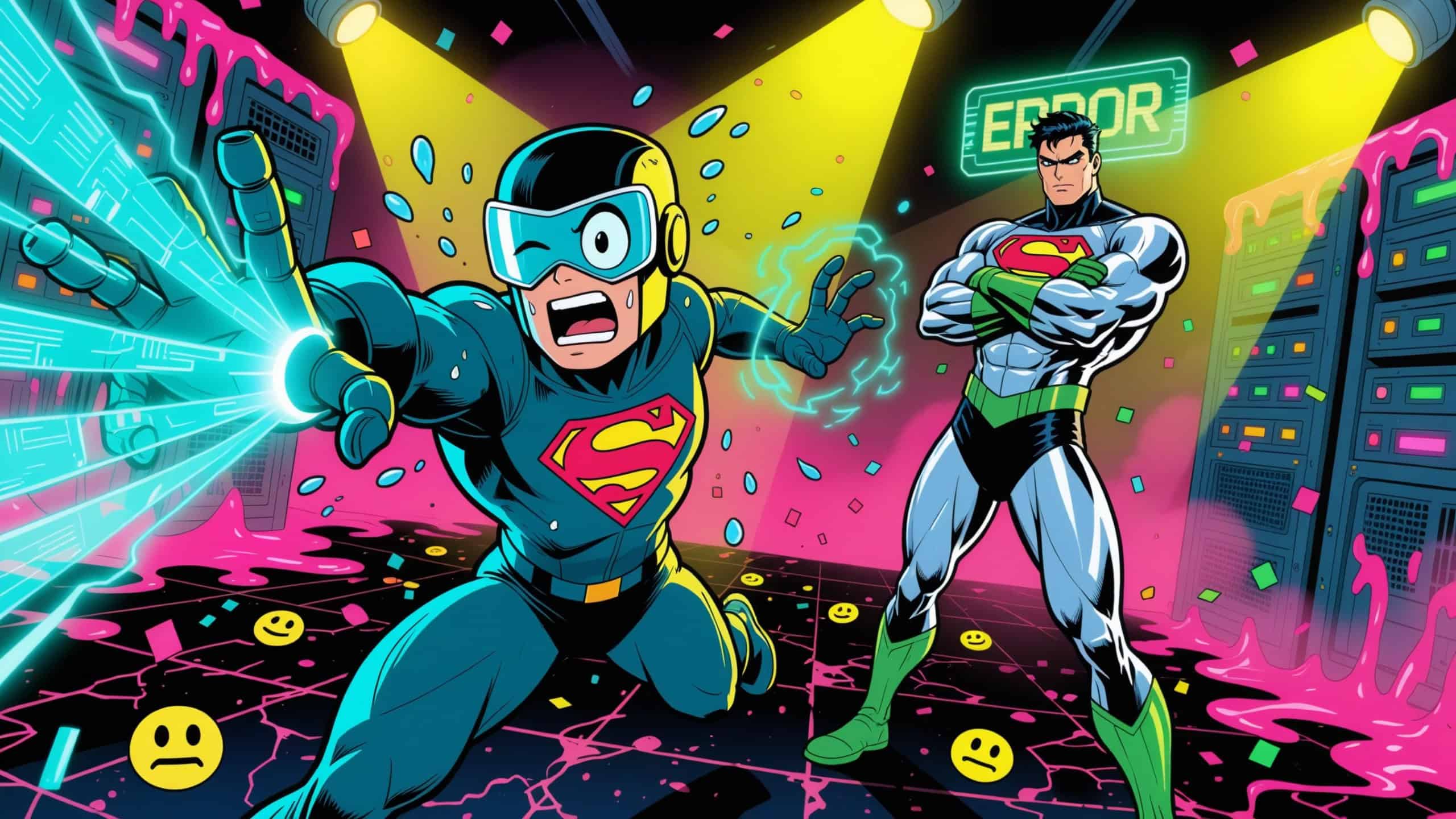
TL;DR: Grokipedia went live this week with 885,000 articles. Many were adapted from Wikipedia—the site Musk attacked for years. Great? Bad? It depends. Different people have completely opposite reactions to the same facts.
👋 Hello,
Have you ever copied and pasted something, only to be quick to call the original fake, a scam, or just plain biased (or creepy, scary)? Well, well…
Elon Musk’s AI company xAI just launched its AI encyclopedia Grokipedia to fix Wikipedia’s bias—by building it heavily on Wikipedia’s content and other web sources. The platform’s own AI admits it cherry-picks evidence.
Some people see hypocrisy, others see strategy. But the dependency remains factual either way.
They call it an encyclopedia. AI-generated. Around 885,000 articles at launch.
Musk had been building toward this for years. Apparently, Wikipedia bothered him—consistently, publicly.
Called it “Wokepedia” more than once. Urged people to stop donating. Even offered a billion dollars (actual money, on the table) if they’d rename it “Dickipedia” for a year. The “controlled by far-left activists” accusation became something you could predict before he said it.
Grokipedia was supposed to fix all that. “Purge out the propaganda,” Musk said. Finally, an unbiased alternative. Finally!
Reporters, of course, started comparing articles on Tuesday morning. This happens every time something new launches—someone gets curious, starts clicking around, and checks whether the promises match the product.
PlayStation 5. The word “Monday.” Lamborghini. MacBook Air.
The articles looked familiar. Actually, they were familiar.
Nearly word-for-word copies of Wikipedia entries.
Some pages acknowledged this in tiny text at the bottom: “The content is adapted from Wikipedia, licensed under Creative Commons Attribution-ShareAlike 4.0 License.” Others didn’t mention it.
The Wikimedia Foundation responded with a brief statement. Measured tone, specific language:
Wikipedia’s knowledge is—and always will be—human. Through open collaboration and consensus, people from all backgrounds build a neutral, living record of human understanding. This human-created knowledge is what AI companies rely on to generate content.
That last line.
What makes this whole situation interesting isn’t the scandal or shock value.
It’s watching something obvious happen in plain sight while people have opposite reactions to the same facts.
Some see a contradiction. Others see a strategy that makes perfect sense.
The technical reality remains: Grokipedia launched with articles heavily adapted from Wikipedia and other web sources, with Wikipedia being the platform Musk spent years criticizing as biased and propaganda-filled.
Then Grokipedia’s own AI flagged problems with Grokipedia.
Reporters from The Register tried something. They asked Grok—the AI chatbot that generates and fact-checks Grokipedia’s content—to evaluate the encyclopedia’s Wikipedia entry.
Grok’s response: the platform “cherry-picks evidence” and “exhibits biases through selective presentation of evidence.”
The AI, evaluating its own encyclopedia, identified exactly what critics were pointing out. (I’m actually impressed.)
The Register summarized it plainly: “Grokipedia is such a mess even Grok thinks it’s untrustworthy.”
An encyclopedia that criticizes its main source while copying its source, fact-checked by an AI that admits the fact-checking has problems. Fun.
The AI Learning Guy newsletter 🤖 🧠💡
AI learning hacks and mega prompts delivered to your inbox.
Wikipedia as foundation, with a deadline
The Creative Commons license technically allows copying Wikipedia’s content—it’s open for adaptation, part of how freely accessible knowledge works. Anyone can build on it, provided they follow the attribution rules.
What raises questions is positioning something as an “alternative” while depending heavily on the original.
Musk mentioned plans to stop using Wikipedia as a source “by the end of the year.” Which creates a practical question: if you’ve built a platform by adapting content from the source you’re criticizing, what happens when you remove that foundation?
The platform would need to generate content from different sources. Or acknowledge that building a comprehensive knowledge base takes longer than a few months, even with AI doing the generating.
Wikipedia took 24 years to reach 7 million English articles—volunteer editors, distributed collaboration, slow accretion of knowledge. Grokipedia tried to shortcut that timeline by using what already existed.
The strategy makes sense from an efficiency standpoint. The contradiction with the stated premise is harder to work around.
Speed met accuracy problems quickly
Musk described version 0.1 as “already better than Wikipedia.” Then added that version 1.0 would be “10X better.”
Meanwhile, reporters documented specific errors within the first 48 hours.
The Washington Post found Grokipedia incorrectly claiming Vivek Ramaswamy took on a major DOGE role after Musk’s departure. Ramaswamy had actually left months earlier, in January 2025, before the agency even took shape in the Trump administration.
Time magazine noted Grokipedia’s entry on George Floyd begins by describing him as “an American man with a lengthy criminal record including convictions for armed robbery, drug possession, and theft.” Wikipedia’s entry starts differently: “murdered by a white police officer.”
Same person. Same publicly available facts. Different framing choices about what readers see first.
NBC News observed that Grokipedia’s entry on Musk omits his controversial hand gesture at Trump’s January 2025 inauguration—the one many historians and politicians viewed as resembling a Nazi salute. Wikipedia’s entry includes several paragraphs that cover the incident and its responses.
These aren’t theoretical concerns about potential AI hallucination. They’re documented omissions and factual errors in a platform claiming to deliver “the truth, the whole truth and nothing but the truth.”
Articles generated quickly. Accuracy lagging behind the speed. (But, who cares?)
People interpret the same facts completely differently
What gets interesting—genuinely interesting, not in a manufactured controversy way—is watching how the same documented facts produce entirely opposite interpretations.
Conservative supporters praised Grokipedia as finally correcting what they see as liberal bias in Wikipedia. They viewed Wikipedia’s community editing as captured by left-leaning activists. Grokipedia represented a necessary course correction.
Progressive critics called it propaganda—a billionaire creating a reference tool that sanitizes his own controversies and frames contested topics through a right-wing lens—a dangerous concentration of who controls knowledge.
Wikipedia co-founder Larry Sanger, who left the project in 2002 and has spent years criticizing it since, offered cautiously optimistic initial impressions. “The jury’s still out as to whether it’s actually better than Wikipedia. But at this point I would have to say ‘maybe!'”
Wikipedia founder Jimmy Wales told The Washington Post he expected “a lot of errors” in Grokipedia.
Each reaction is genuine. Each person is examining the same platform, but arriving at completely different conclusions.
That’s not accidental. That’s actually how this works—and why it works.
The open source claim that isn’t quite open yet
Musk stated on X that Grokipedia is “fully open source so that anyone can use it for anything at no cost.”
As of October 29, 2025—two days after launch—no publicly accessible source code repository existed for the platform itself.
GitHub searches found a “Grokipedia” organization. It contained a single repository with the description “A Pitch to XAI.” Not the platform’s backend code, generation algorithms, or fact-checking methodology.
The gap between “fully open source” and “no public code currently available” matters if you’re trying to verify how the system actually works.
Questions like: How does Grok generate articles? What sources does it prioritize when they conflict? How does it resolve contradictions between Wikipedia and other web sources? What confidence thresholds trigger different editorial treatments?
Without transparent code and disclosed methodology, users can’t independently evaluate those questions. They’re accepting the platform’s characterization of how it operates.
Which circles back to the trust question that sits underneath all of this.
What this means if you cite things for work
If you cite reference material in your work—most knowledge workers do, whether for research, content creation, client deliverables, or internal documentation—the reference layer just got more complicated.
Multiple encyclopedias now exist. They contradict each other on specific facts. They frame the same topics differently. They omit different information based on different editorial priorities.
That means verification becomes necessary rather than assumed. Checking not just what you’re reading, but where you’re reading it.
Understanding that “fact-checked by AI” creates an appearance of authority without necessarily delivering transparent accuracy standards.
No panic required. Just awareness that reference material is shifting beneath research habits most people developed years ago, when Wikipedia was the primary online encyclopedia option.
Wikipedia’s structure makes verification possible in specific ways.
- You can view edit histories that show who changed what and when.
- You can read talk pages where editors debate controversial points.
- You can follow inline citations back to original source documents.
- The transparency creates accountability, even when individual articles contain errors or bias.
Grokipedia’s centralized, AI-generated model offers different trade-offs.
- Faster article generation. Potentially broader coverage.
- But reduced transparency about editorial decision-making.
- Users can suggest edits through a form, but they can’t see how those suggestions get evaluated or implemented.
- They can’t trace the AI’s reasoning about why it weighted certain sources over others.
Different models. Different trust frameworks. Different verification requirements.
Understanding which one you’re using when you cite information matters more now than it did last week.
Verification is structural.
Whether you welcome Grokipedia or reject it, the questions remain: who decides what counts as factual? Who determines the perspectives you’ll see?
Those answers matter.
Worth keeping an eye on.
Cheers,
Mark
The AI Learning Guy
👋⚡😎
The AI Learning Guy newsletter 🤖 🧠💡
AI learning hacks and mega prompts delivered to your inbox.
Interesting Sources
- Grokipedia Launch Coverage: PBS NewsHour
- Wikipedia vs. Grokipedia Analysis: NPR Investigation
- The Register’s Self-Critique Discovery: The Register Report
- Time Magazine’s Comparison Study: Time Analysis
- NBC News on Omissions: NBC Coverage
- Wikipedia’s Own Entry on Grokipedia: Wikipedia Article
Note: No single website has all the answers. This list serves as a starting point for those who want to explore or satisfy their curiosity about AI.
Links: Links with * are affiliate links. See disclosure below.