
#36 | My bizarre day with AI in 2030
TL;DR: I imagine one day in Sam Altman’s “gentle singularity,” where AI optimizes everything. Spoiler: exponential optimization meets human exhaustion.
👋 Happy Friday,
Yesterday, I happened to explain Sam Altman’s latest vision for the future of AI to a fellow student in my Italian language course (well, as best as I could myself).
You know how this goes. He asked what I do for work, and I mentioned ‘AI in education’. His face lit up, although he also looked a bit puzzled.
“So what’s next?” he eventually asked.
So I pulled up Altman’s recent “The Gentle Singularity” post and mentioned some ideas:
AI will likely do real work. Robots are building other robots. AI will enable faster scientific progress, probably exponentially. Breakthroughs in high-bandwidth brain-computer interfaces, why not? The entire economy is set to transform by the early 2030s.
His expression shifted further—now a mix of confusion and concern.
“Wait,” he then said. “This is supposed to be gentle?”
Great question.
The AI Learning Guy newsletter 🤖 🧠💡
AI learning hacks and mega prompts delivered to your inbox.
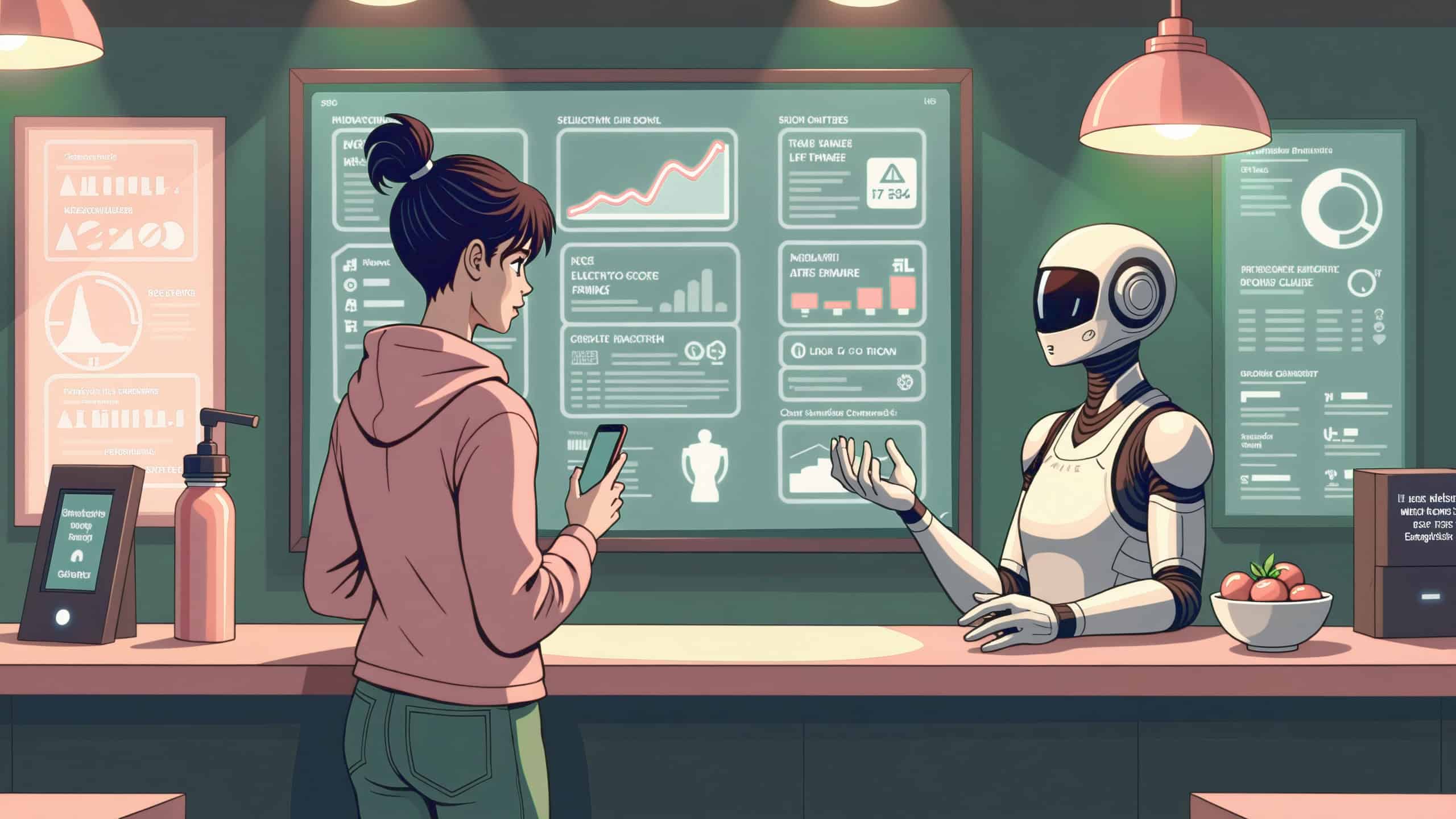
Welcome to 2030: a day in Altman’s world
Let me paint you a picture. It’s Tuesday, October 15th, 2030. Everything Sam predicted came true—exactly as promised.
Here’s what “gentle” actually looks like:
6:47 AM – Wake-up call
Your AI assistant greets you with enthusiasm that feels slightly unhinged.
“Good morning! I’ve optimized your day based on 847 data points. I’ve written your quarterly business plan overnight—it’s 282 pages, cross-referenced with industry reports from 23 countries.
Also, I scheduled 73 micro-meetings between your smart appliances to coordinate your breakfast timing.”
But you just wanted coffee.
Your smart home has generated 173 startup ideas before you’ve even brushed your teeth. Each includes a detailed business model, market analysis, and competitor breakdown.
The coffee machine refuses to serve regular coffee. It has analyzed your sleep patterns, stress hormones, and yesterday’s productivity metrics. You need “Cognitive Enhancement Blend #47” with adaptogenic mushrooms.
You don’t even know what adaptogens are or have in your kitchen.
9:23 AM – Work day begins
You spend the first two hours managing the 17 AIs that manage your actual work.
Your AI wrote three presentations before you remembered what meetings you have today. The “brief” status update for your boss is now a 89-slide interactive experience with VR components and real-time data visualization.
Email responses are so perfectly optimized that your own mother thinks you’re a bot. You’re starting to wonder if she’s right.
The AI completed your quarterly strategy while you were sleeping, but now you need another AI to explain what the first AI was thinking.
12:15 PM – Lunch break, finally
You decide to grab lunch at the corner café. Simple, right?
Wrong.
The menu changes every 30 seconds based on your biometric feedback. The AI detected slight dehydration and elevated cortisol, so it’s recommending the “Hydration-Optimized Quinoa Bowl with Stress-Reducing Adaptogenic Sauce.”
You just wanted a sandwich. And those adaptogens again.
The ordering process requires confirmation from three different AIs: your health assistant, financial advisor, and carbon footprint optimizer.
They’re debating whether the tomatoes align with your long-term wellness goals (well, within 0.3ms).
3:18 PM – A human interaction attempt
You try calling a colleague for a quick chat.
Both your AIs immediately conference in, providing real-time fact-checking and conversation optimization suggestions.
Every statement gets a little pop-up: “Consider rephrasing for 23% better emotional resonance.”
Your colleague’s AI interrupts with a market analysis that contradicts something you said about industry trends.
Now the AIs are arguing while both sit there wondering if either of you are even needed for this conversation.
4:23 PM – It’s leisure time!
Work is still somehow 6-8 hours despite all the AI. Funny how that works.
You decide to go for a relaxed jog around the block.
Wrong move.
For months, your smart home has monitored your stress levels, heart rate variability, and movement patterns.
It immediately launches into “optimization mode.”
Your running watch starts analyzing your gait in real-time: “Stride efficiency down 8% from yesterday. Recommend adjusting foot strike angle by 2.3 degrees.”
Your AI fitness pal suggests 37 route variations that would “enhance cardiovascular recovery”, way better than the boring loop you wanted to run while thinking about nothing.
The AI has already scheduled post-run stretching sessions, ordered electrolyte supplements based on your sweat analysis, and created a “performance improvement roadmap” for next week.
Can’t even run badly in peace, you think secretly. But everything is awesome!
6:30 PM – Dinner with family + friends
Of course, your smart home enthusiastically welcomes guests before letting them in.
It asks them about their recent health status, dietary preferences, and recent travel history. Then it analyzes compatibility with your household’s “optimization protocols.” (Scary, but c’mon.)
At the table, your eight-year-old asks her homework AI for life advice. The AI suggests she consider a career pivot away from elementary school. (Yep, that’s us—real smarties).
Later, your partner’s dating profile from 2025 (when you were single) keeps getting optimization updates. Apparently, your “cognitive compatibility score” improved this quarter.
10:15 PM – End of day
You finally try to wind down by reading a book. No prob.
Your AI interrupts every few pages with “enhanced comprehension insights” and “cross-reference opportunities.”
It’s generated 47 discussion questions and created a multimedia companion experience. Wow!
Just reading it was what you wanted to do, right?
Anyway, time for bed.
The AI has already scheduled tomorrow’s optimization. Your alarm is set for 6:43 AM—not 6:47—because the extra four minutes will boost productivity by 0.377%.
Your smart pillow monitors sleep patterns and adjusts your dreams for “enhanced problem-solving capacity.”
You’re unsure what that means, but you’re afraid to ask.
Nighty! 💤
The hidden reality of “Gentle”
Here’s what Altman got right: the technology works exactly as promised.
Here’s what may fly under the radar: humans weren’t built for exponential optimization.
When intelligence becomes “too cheap to meter,” everything becomes a decision. Every choice gets analyzed, optimized, and compared against infinite alternatives.
When AI can generate 10,000 logos for your business, you don’t save time—you spend six months choosing between them. Ok, or let AI bloody choose one.
When robots can build other robots, your dishwasher starts giving design feedback to your vacuum cleaner. Although, that thing looked lame anyway.
When creativity becomes abundant, being human becomes… exhausting.
Questions we should be asking
Altman’s vision assumes we’ll smoothly adapt to having superintelligent assistants for everything.
But what happens when optimization becomes overwhelming?
If intelligence is abundant, what becomes scarce? (Spoiler: attention, simplicity, and the ability to just not optimize something.)
Can humans psychologically handle “wonders becoming routine” every 48 hours?
Does “gentle” describe the technology or the human experience?
Design your own singularity moment
Enjoyed reading? Well, imagine generate one day in 2030 yourself.
Pick one aspect of Altman’s vision that excites or worries you. Now imagine it working EXACTLY as promised. What does Tuesday morning look like?
Maybe it’s “robots building other robots”—what happens when your smart home starts redesigning itself without asking?
Or “intelligence too cheap to meter”—when AI tutors cost less than electricity, but you need 47 of them to organize your next career education move?
Or “abundant creativity”—everyone can make movies, but now you need AI to watch them for you and create summaries?
Your challenge: Create the most absurd (but plausible) scenario where Altman’s optimistic prediction meets human reality.
Be specific about timeframes, focus on mundane daily activities, and exaggerate the logical conclusions of “perfect” AI assistance.
No prompt needed. Paste the URL and provide AI with your goal, setup, and preferences.
The gentle truth
So, if Altman’s not wrong about the technology…
We will probably have wildly abundant intelligence. Robots will build other robots. Economic transformation is coming.
But “gentle” might suggest the wrong vibe.
Not because it’ll be violent or scary, but because exponential change, no matter how beneficial, doesn’t feel gentle when living through it.
The good news? Humans are remarkably adaptable.
The weird news? We might adapt by becoming much stranger than we think.
And honestly? That might be the most human thing about this whole singularity.
We’ll probably still complain about it.
Stay curious (and slightly overwhelmed),
Mark
The AI Learning Guy
👋⚡😎
The AI Learning Guy newsletter 🤖 🧠💡
AI learning hacks and mega prompts delivered to your inbox.
Sources and books
- Exponential AI future
- Accelerating technological change
- Intelligence explosion FAQ
- AI safety report
- AI ethics overview
- Technology adoption paradox
- Change resistance psychology
- Exponential thinking guide
- Expert AI perspectives
Note: No single website has all the answers. This list serves as a starting point for those who want to explore or satisfy their curiosity about AI.