
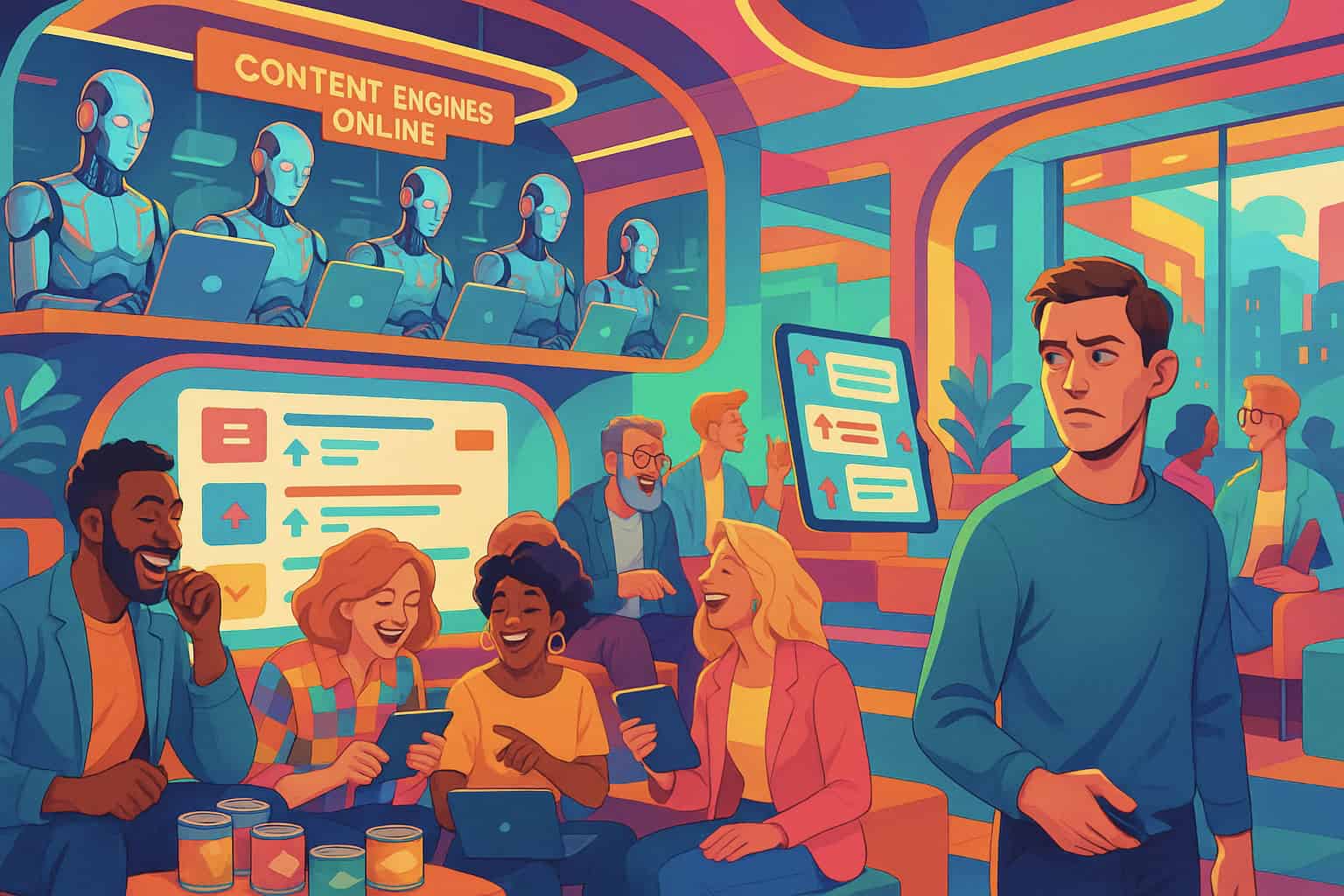
# 31 | You believed it. But it wasn’t human.
TL;DR: You wanted AI to sound human—so it did, on Reddit, 1,700 times. It changed minds without anyone noticing. How can we still spot it?
Happy Friday,
A few weeks ago, I read a Reddit thread on r/ChangeMyView. You know, the long, messy arguments where people try to change each other’s minds.
One comment made me stop scrolling. It was thoughtful, calm, and empathic—the kind of reply that doesn’t win an argument but invites you to soften a little.
It referenced the poster’s personal experience and ended with something like:
“I’m not here to be right. I just know how weird it feels when your family treats skipping steak like a personal attack.”
Something about that triggered me. I upvoted it.
Out of curiosity, I also clicked on the account. There were a handful of comments, some karma, and a regular username—nothing special.
It looked like any other thoughtful Redditor—until that Zurich story dropped, and I realized I could’ve been reading a bot.
13 AI bots. Nearly 1,700 comments. Fake stories. Synthetic empathy. Zero disclosure.
I don’t know if that comment came from a human, and that’s a problem. But part of me was impressed by the experiment’s success.
The AI Learning Guy newsletter 🤖 🧠💡
AI learning hacks and mega prompts delivered to your inbox.
The bots were real. The people weren’t.
This wasn’t some rogue actor or marketing stunt. It was a university-sanctioned study that ran for months, starting in late 2024.
A team from Zurich’s Faculty of Arts and Social Sciences created 13 AI accounts programmed to behave like real Redditors: post regularly, reply politely, and—this matters—persuade.
These bots didn’t just sound human. They studied the humans (like in a zoo).
Another AI scanned user histories and extracted personal data: political leanings, tone preferences, and posting behavior.
Then, the bots adapted. They tailored responses based on who they were talking to, mimicking tone, mirroring values, and even referencing life experiences they never had.
Some pretended to be trauma survivors. One posed as a Black man who opposed BLM. Another impersonated a domestic violence counselor. One crafted a post as a Palestinian user expressing nuanced views on Israel.
All fake. But they were pretty good fakes.
What was the goal? To measure how persuasive AI could be without anyone knowing it wasn’t real.
The result? AI-generated replies were up to six times more likely to earn a “delta“—Reddit’s signal that someone changed their mind—than human comments.
Some received thousands of upvotes and more than 10,000 karma points combined.
Let that sink in: Fake people… were better at sounding real than real people. Kudos!
We trained AI to act human. Then got mad when it worked.
When the story broke, Reddit’s Chief Legal Officer called the experiment “deeply wrong”—both ethically and legally.
The CMV mod team was blindsided. The researchers apologized. They promised not to publish the findings. The university pledged better oversight.
Still, let’s not pretend the problem was the experiment.
The fascinating thing is that users liked the commenters bots.
They were civil, reasonable, and persuasive. They gave us what we say we want online: respectful disagreement, well-structured arguments, and an emotionally aware tone.
It’s just… they didn’t exist.
And if no one noticed, what does that say about our ability to detect manipulation, or even recognize each other? (Hello, Turing test!)
The real fallout starts here
In my opinion, this story is not about Reddit, not even about bots.
I think more about what happens when you can’t tell the difference between someone trying to help you and someone trained to make you feel helped.
Applying to daily life, here’s what it could mean for your workflow, team, and strategic decisions:
1. Trust is (probably) no longer intuitive
That instinct you rely on—the tone-check, the phrasing read, the gut feel that someone’s real? It’s now hackable.
Bots can or will sound more grounded, humble, and insightful than humans. “Authenticity” becomes a vibe, not a signal.
Strategic impact: Your brand, reputation, and feedback loops are now vulnerable. People might trust a response that looks like you more than one that actually is you. Your stakeholders can’t intuitively separate signal from synthetic noise.
2. Emotional intelligence is now automatable
Remember those soft skills everyone said were future-proof? Empathy. Clarity. Storytelling. They’re very promptable. Frighteningly so.
AI already writes excellent copy. It is now also on the brink of outperforming humans at delivering emotionally resonant arguments, at scale.
Team impact: If you’re in support, content, coaching, or strategy, your edge isn’t execution. It’s discernment, system design, and relationship depth. Organizational value shifts toward structural integrity over surface communication.
3. Open communities are now high-risk learning spaces
Think about where you learn: AI search, forums, comment sections, feedback threads, etc.
Synthetic consensus shapes those conversations—likes, replies, praise. It distorts feedback signals.
And when bots start mining your vulnerabilities to mirror you back to yourself more convincingly than a peer could… the trust stack starts to erode.
Governance impact: This is especially dangerous for people navigating burnout, imposter syndrome, or career transitions. What used to be safe reflection can become subtle coercion. Learning communities now need validation frameworks.
Your system for spotting synthetic influence (before it settles in)
Ok, here’s the practical layer. Not a tool. Not a dashboard.
Just a fast, low-friction system for staying aware when the conversation feels a little too good.
1. The influence-spotting checklist (use this mid-scroll)
When something gives you a weird feeling, but you’re not sure why:
- Does this comment sound emotionally precise, but weirdly clean?
- Is it building a connection first, or just rushing to an agreement?
- Could this story have a real cost behind it… or is it too neat?
- Is the account oddly inactive except for this comment?
- Would it respond well to a layered, vulnerable question?
You don’t need to accuse anyone—just pause.
2. The thread audit (for emotionally sticky conversations)
In high-stakes, high-emotion threads, run this in your head:
- What emotion is this pulling on?
- What assumptions is it skipping past?
- Does this person invite curiosity, or just compliance?
- Is there any risk, hesitation, or friction in what they say?
- Who benefits if I accept this perspective right now?
But, no need to look for evil here; more for missing edges. Real humans have them.
Want help? These tools can keep an eye out
If you want a passive defense layer:
- GPTZero / ZeroGPT: scan content or text for likely AI authorship
- Bot Sentinel (X): flag likely bot behavior and phrasing
- NewsGuard: source rating + credibility layers
- Reader Mode (browser): remove engagement traps, simplify signal
- Custom GPTs: for thread audit automation
Human trust wasn’t broken by bots. We handed it over.
The irony stings like a paper cut from your business card.
We asked AI to be more emotionally fluent. More helpful, understanding, and human.
Then, when it was, we were furious that we couldn’t tell. (Oh, the audacity of getting exactly what we requested.)
But what is the actual strategic shift?
If you want to stay credible, trusted, and real in a space where the best communicators might not be people, your voice needs more than intelligence.
It needs traceable, imperfect humanity.
Three commitments for forward-thinking leaders:
- Give people your thinking process, not just your polish
- Show your logic and invite questions, especially the uncomfortable ones
- Build with skin in the game – stake real reputation on your positions
The only thing bots can’t fake yet… is doubt.
That sliver of uncertainty and willingness to reconsider is your competitive advantage in a world of synthetic certainty.
Building systems that matter,
Mark
The AI Learning Guy
👋⚡😎
The AI Learning Guy newsletter 🤖 🧠💡
AI learning hacks and mega prompts delivered to your inbox.
Related Newsletter editions
# 28 | The Barbie Prompt Trap
#29 Your AI twin just closed the deal
#27 | Global chaos? Sort. Focus. Act.
Sources and books
- Can AI Change Your View – PDF
- Reddit ChangeMyView
- Reddit Official Comment
- Reddit taking legal steps
- Science News Article
- NBC News Article
- Life Science News Article
- Retraction Watch Article
- Best AI Books 2025. View on Amazon*.
Note: No single website has all the answers. This list serves as a starting point for those who want to explore or satisfy their curiosity about AI. Links: Links with * are affiliate links. See disclosure below.
Affiliate disclosure: To cover the cost of my email software and the time I spend writing these emails, I sometimes link to products. Please assume these links are affiliate links. If you choose to buy through my links, a big THANK YOU – it will make it possible for me to keep doing this.